
1829 H10C Capped Bust Half Dime
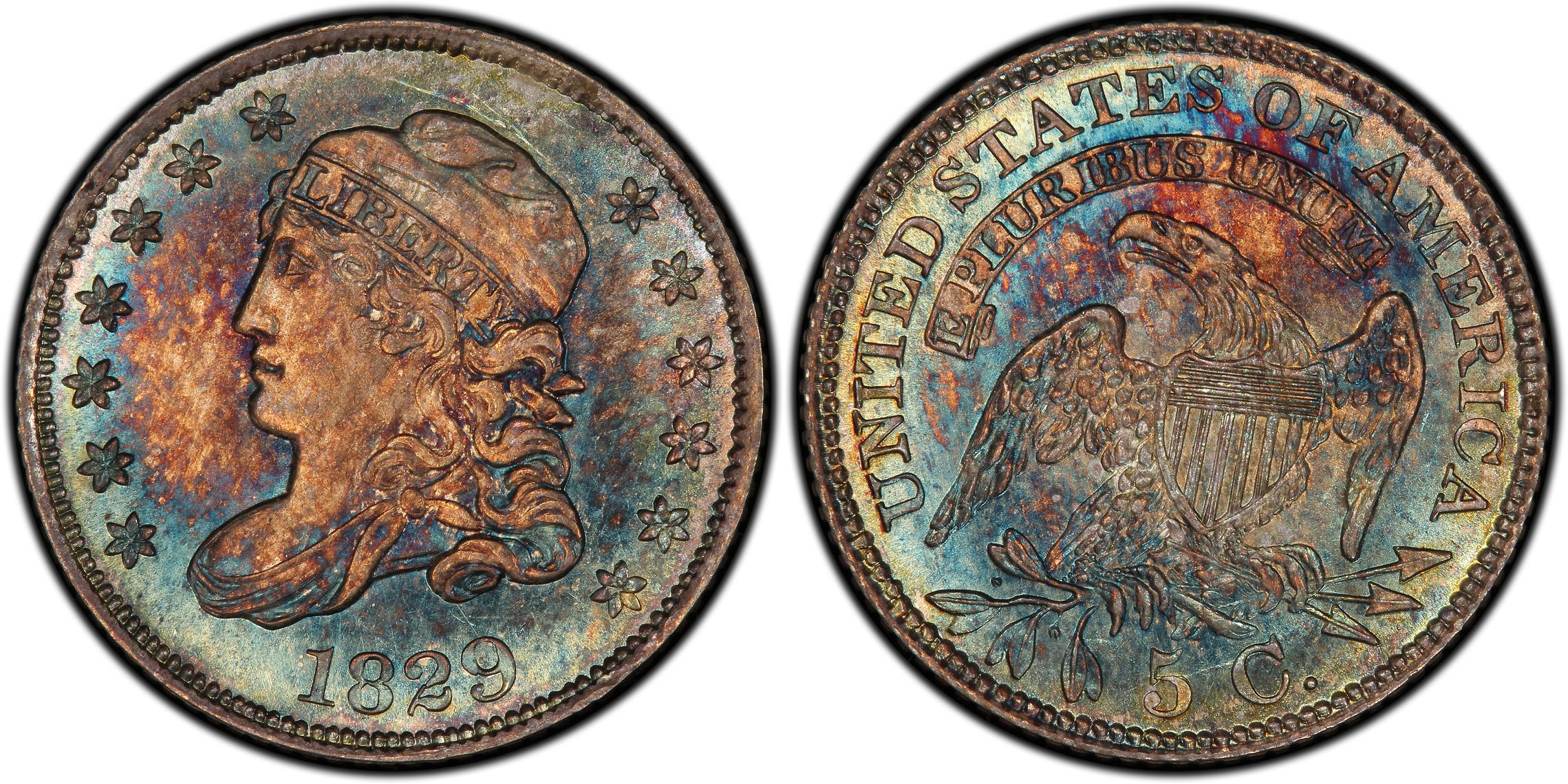 The 1829 Capped Bust Half Dime, known as the 1829 H10C (Regular Strike), is a fascinating piece of American numismatic history. It was produced at the Philadelphia Mint, the only mint in the United States at the time, and is part of the esteemed Capped Bust series. This particular coin reflects the early developments in U.S. coin minting technology and design refinement.
Mintage and Numismatic Significance
The total mintage for the 1829 H10C was 1,230,000 coins. Despite this relatively high mintage for the era, surviving specimens in high grades are scarce, making them attractive to collectors. The coin is cataloged with the PCGS (Professional Coin Grading Service) as #4278. The Capped Bust Half Dime design was created by Chief Engraver William Kneass, featuring Lady Liberty with a cap, facing left, symbolizing freedom. This intricate design is one of the key highlights in U.S. coinage, showcasing the artistry and craftsmanship of the early 19th century.
Rarity and Market Value
The rarity of the 1829 Half Dime increases significantly with coins in higher grades, such as Mint State (MS) conditions. Coins in lower uncirculated grades like MS60 to MS62 have lesser rarity but still attract buyers due to the historic significance of the series. Over the years, the market has seen variations in the coin's value based on condition and collector demand. For instance, in auctions, an MS66 example has been known to fetch prices as high as $10,000, reflecting its desirability among dedicated numismatists. Meanwhile, more commonly found grades might trade for several hundred to a few thousand dollars, illustrating the coin's dynamic valuation spectrum.
Historical Context
From a historical perspective, the 1829 Half Dime embodies the economic and political nuances of early America. This period, under President Andrew Jackson, was marked by significant changes in the American banking system and expansions in trade. As a small denomination coin, the Half Dime played a crucial role in everyday commerce, facilitating transactions in a growing nation.
Varieties and Collecting Trends
The 1829 H10C features a few distinct varieties that are of particular interest to collectors. Varieties arise due to differences in die states or minor design alterations during the minting process. Serious collectors often seek these varieties to complete their collections, driving certain examples to higher premiums. Collectors are attracted to the Capped Bust series not only because of its intricate design and historical significance but also due to the challenge it presents in finding high-grade examples. This series marks an era of evolving minting technology and artistry, making it a captivating focus for numismatic experts and collectors alike. In summary, the 1829 Capped Bust Half Dime is a key artifact in the panorama of U.S. coinage. Its rich historical context, rarity in high grades, and significant market value make it a coveted addition to any numismatic collection. The ongoing interest and study from esteemed numismatic resources like PCGS Coin Facts enrich understanding and appreciation of this coin's place in American history.


